
141 Ugandans trained abroad as EACOP pushes local skills ahead of first oil
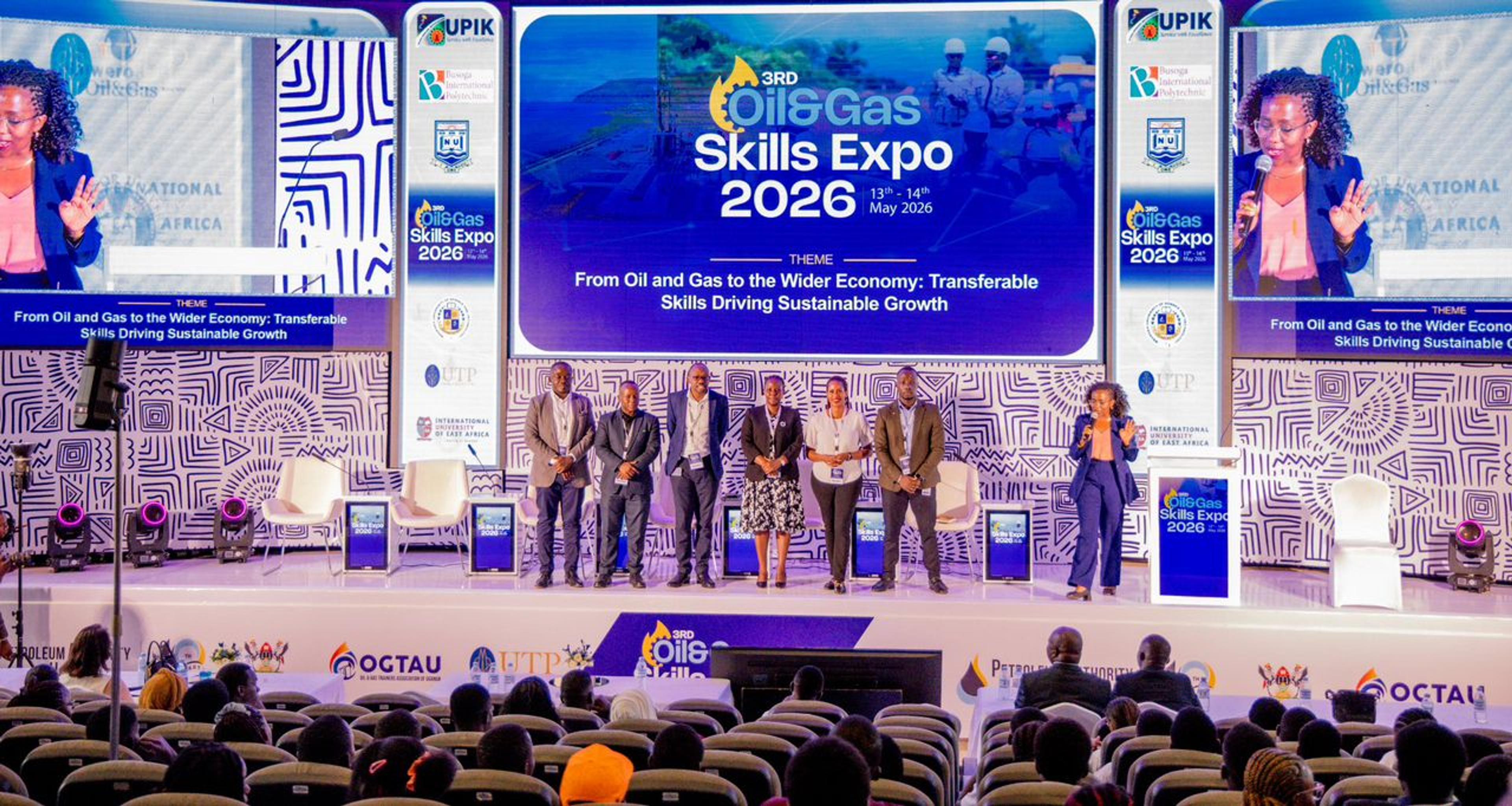
The East African Crude Oil Pipeline (EACOP) has reaffirmed its commitment to ensuring Ugandans acquire transferable skills that can support growth across the wider economy, as the country prepares for first oil in July 2026.
Speaking at the third Oil and Gas Skills Expo 2026, held over two days at Makerere University in partnership with the Petroleum Authority of Uganda (PAU), EACOP's HR Manager, Andrew Mafabi, called on universities and vocational institutions to redesign curricula with a stronger focus on hands-on training, to ensure graduates are market-ready for both oil and gas operations and other industries.
The Expo, held under the theme "From Oil and Gas to the Wider Economy: Transferable Skills Driving Sustainable Growth," brought together government officials, industry players, academic institutions, students and young professionals to discuss the future of skills development in Uganda's energy sector and beyond.
"The challenge for us as nationalists is ensuring our education system remains relevant," Mafabi said. "We need to shift the message toward hands-on experience. Looking at international benchmarks, like the Arabic model of vocational excellence, it's clear that we must rethink how we educate the African graduate to ensure they possess the specific skills the market actually demands."
Mafabi added that while Ugandans now possess the technical capacity for oil and gas work, exposure to real-world operations remains a challenge. He said EACOP has responded by investing in attachments, overseas training and practical exposure, including sending 141 trainees abroad to acquire advanced skills for operating the pipeline.
Beyond the oil and gas sector itself, the Expo also showcased how other businesses are benefiting from the industry's growth, from satellite television installations in worker camps to expanding local hospitality services.
Ernest Rubondo, Executive Director of the Petroleum Authority of Uganda, said the Expo's theme reflects Uganda's current stage of development. As the industry shifts from infrastructure construction to commercial oil production, he said employment numbers in the sector will naturally reduce, but skills gained from welding and scaffolding to health, safety and environment management remain highly sought after in other sectors such as construction, hospitality and aviation.
"The standards in the oil and gas sector are admired by other industries. Skills like plumbing, electrical work, and heavy goods vehicle driving are not confined to oil and gas, they are transferable to the wider economy," Rubondo said.
According to figures released at the Expo, the sector has created over 21,000 direct jobs, 86 percent of them filled by Ugandans, alongside 50,000 indirect jobs and 140,000 induced jobs. More than 14,000 Ugandans have been trained and certified through partnerships between government, oil companies and institutions including Makerere University, the Uganda Petroleum Institute Kigumba (UPIK) and Busoga Polytechnic Institute. Internationally recognised certifications such as OPITO, EICTB and City & Guilds have positioned Ugandan technicians to compete globally.
Organisers pointed to Norway's experience during its own oil boom, when heavy investment in training locals helped build a globally competitive workforce, as a model Uganda's certification programmes are seeking to emulate. Officials said the country's proactive training strategy is intended to help it avoid the pitfalls other oil economies faced when local workforces were left underprepared for the industry's transition to commercial production.
Officials at the Expo said Uganda is positioning itself to become East Africa's hub for oil and gas expertise, with the potential to export skilled labour regionally and globally, while skills from welding, engineering and safety management could also open pathways into the renewable energy sector.