
Behind EACOP's pipeline, a quieter fight: Getting women into the welding bay
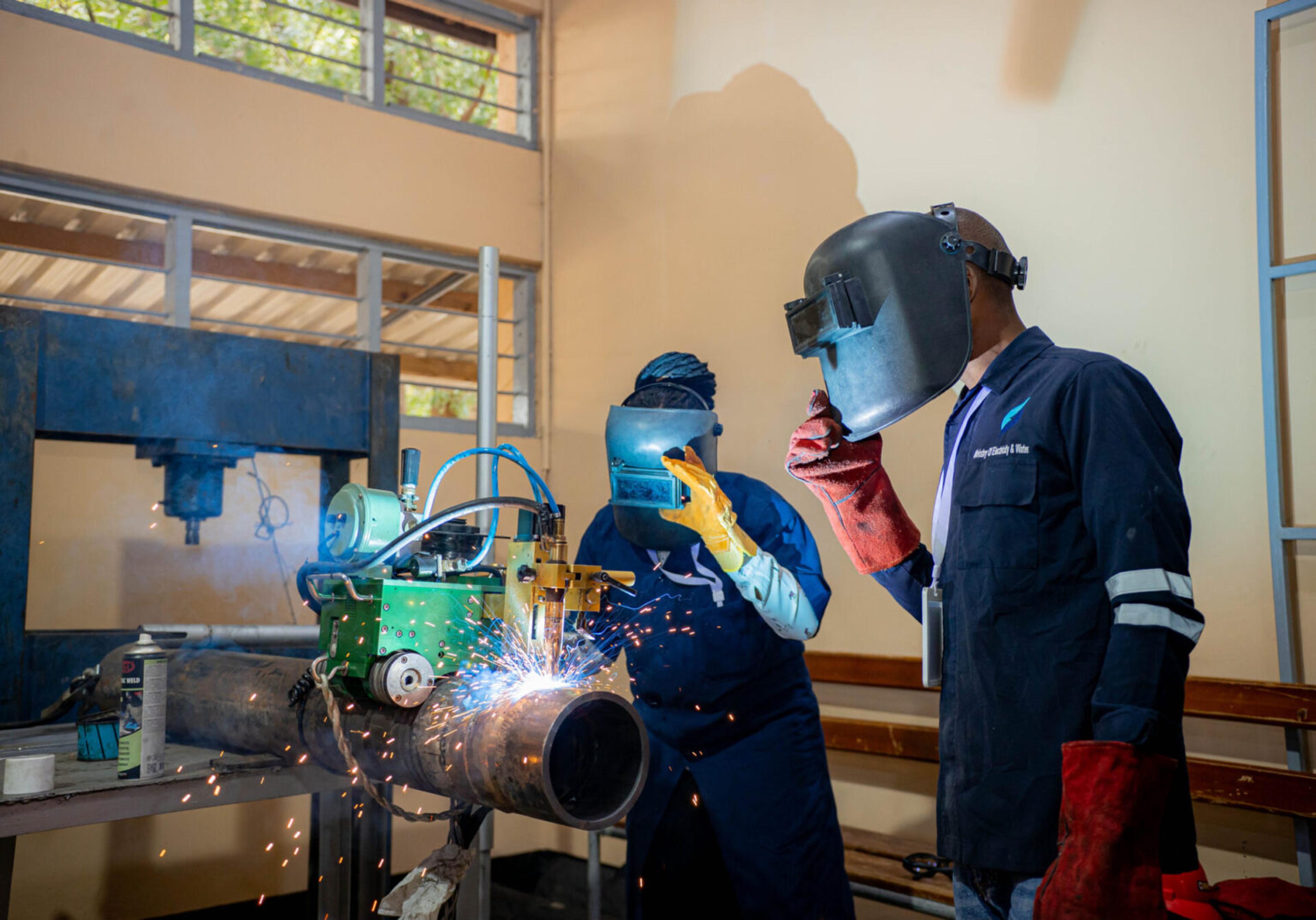
A trainee at the Uganda Petroleum Institute Kigumba says that when she first put on a welding helmet, colleagues told her the work was too dangerous for a woman. Today, she says, her welds pass the same certification inspections as her male classmates. Her account, provided by EACOP, is being held up by the company as evidence that its technical training programs are changing who gets access to skilled trades in East Africa's oil and gas sector.
Welding, rigging, and heavy equipment operation have historically been male-dominated fields across Uganda and Tanzania. EACOP says its training pipeline, run through the Uganda Petroleum Institute Kigumba and vocational colleges in Tanzania, now has women making up as much as 25 percent of trainees in some technical cohorts, training alongside men on identical certification tracks in welding, rigging, and heavy equipment operation.
The figures come from EACOP itself. The company has not published independently audited enrollment or completion data, and the trainees quoted were made available through the company's own communications team.
The training push is part of EACOP's National Content strategy, which the company says is intended to keep more of the economic benefit of the 1,443-kilometre pipeline inside Uganda and Tanzania rather than with foreign contractors. Working with UPIK and Tanzanian vocational colleges, the EACOP Academy and its contractors run programs in coded welding, mechanical maintenance, non-destructive testing, and heavy equipment operation, leading to certifications from the UK's Engineering Construction Industry Training Board and OPITO. EACOP says hundreds of young people have gone through these programs so far, though it has not specified a timeframe or provided third-party verification of that number.
EACOP describes a parallel Gender Equality and Social Inclusion framework, aimed at addressing low female representation in heavy industrial trades through recruitment targeting women, camp facilities designed with gender separation in mind, and mentorship. The company points to training yards in Buliisa, Hoima, Sembabule, and Tanga as evidence the approach is working, saying women there are qualifying to operate cranes and rigging equipment and passing welding assessments for the pipeline's heat-traced sections.
These claims sit alongside a longer, more contested record. EACOP has faced years of criticism from human rights groups, environmental organizations, and some displaced landowners over compensation disputes, resettlement, and the pipeline's environmental and climate impact, criticism that has drawn international attention and, in some cases, legal challenges. EACOP's training initiatives don't resolve those disputes, and the company's public messaging around gender inclusion has coincided with that ongoing scrutiny. Independent labor or gender-equity researchers have not been widely quoted assessing the training program specifically.
Company representatives argue the training has value beyond the pipeline itself. "Our objective is not simply to build a pipeline, but to build local capacity that outlasts the construction phase," an EACOP National Content representative said. Whether that capacity outlasts the controversy attached to the project, or whether the gender gains hold up once construction winds down and jobs become scarcer, is something only time, and better independent tracking, will show.