
From childhood struggles to global recognition: Petua Bakwesegha-Summersby’s journey
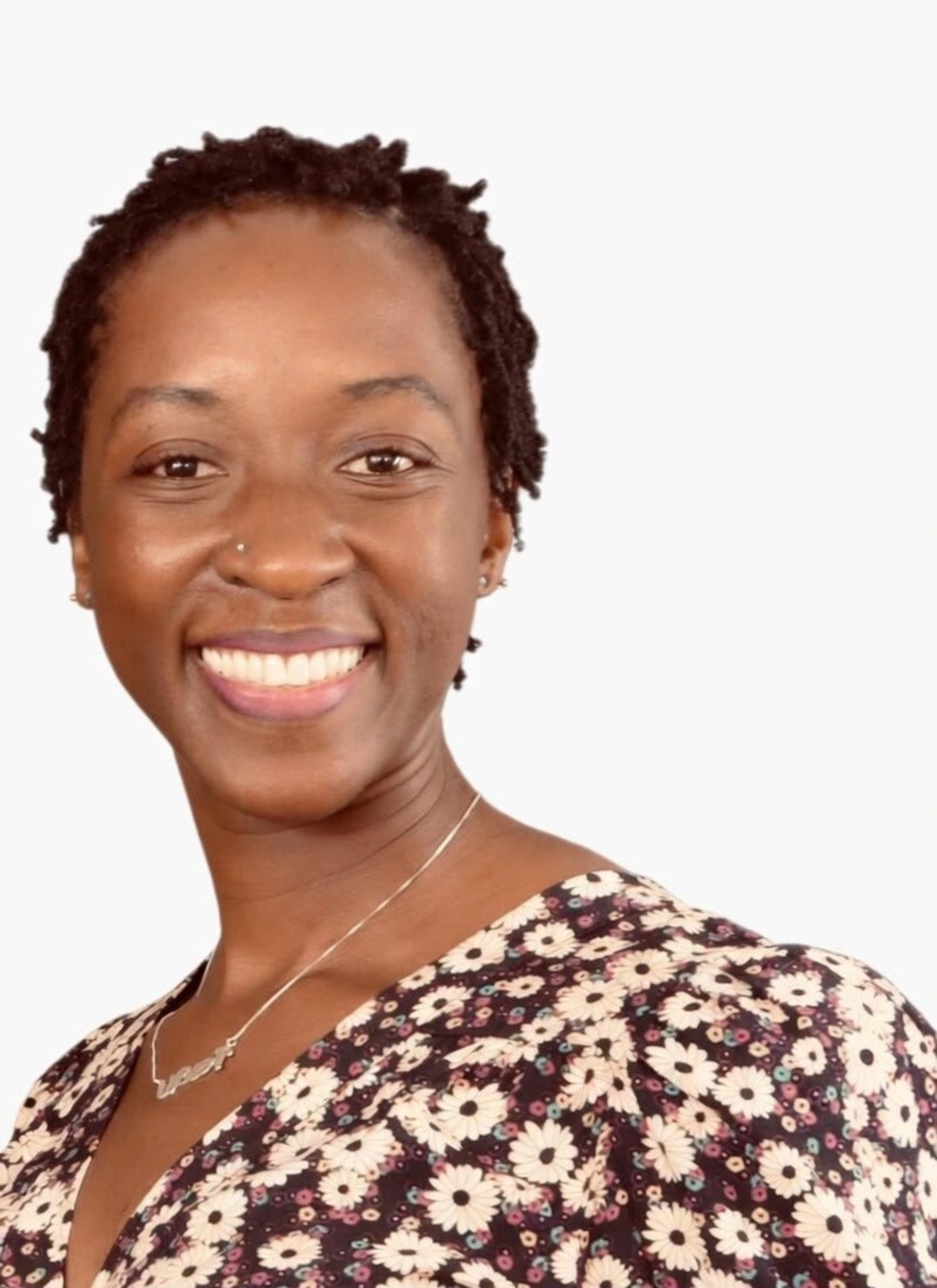
Petua Bakwesegha- Summersby
Darwin based behaviour support practitioner named among Titanium Magazine's Top 50 Global Inspirational Women for 2027 says her life's work began with her own childhood experience of feeling unseen.
For Petua Bakwesegha-Summersby, the philosophy that now anchors her career didn't begin in a lecture hall or a clinical training manual. It began in her own childhood, in the quiet loneliness of a girl who, by her own account, could "function, achieve, lead and appear confident" on the outside while carrying an unspoken need to be noticed and understood on the inside.
Today, Bakwesegha-Summersby is the founder of Heartward House, an NDIS registered organisation delivering trauma informed Positive Behaviour Support and employment services to children, adolescents and adults with complex behaviour support needs, including within schools and the forensic disability space. She has just been named to Titanium Magazine's "Top 50 Global Inspirational Women to Look Out For 2027," an honour recognised in Marrakech, Morocco, and she serves as Vice President of the Uganda Association in the Northern Territory.
But she traces the roots of that work back decades, to a childhood spent moving between countries as the daughter of two diplomats.
A childhood of discipline, faith and quiet struggle
Born in Kenya and raised largely in Ethiopia and later the United States, Bakwesegha-Summersby describes a household defined by high expectations. Her father, she says, was "a deeply principled man and a disciplinarian" for whom education and character were "never negotiable," at times arriving unannounced at her school to check she was upholding the standards expected of her.
School became the place where she flourished, rising through leadership roles from Patrol Leader at Wicoff School in New Jersey to Head Girl at Taibah Junior School and later Deputy Head Girl at Kabojja in high school. Yet she says her teachers saw past the confident, high achieving student to "the fears I carried" and "the moments when I was uncertain of myself."
"My teachers seemed to see something in me that I could not always see in myself," she says.
That duality, outward achievement alongside an inward sense of not being seen, shaped what she now identifies as one of the defining experiences of her early life: Growing up, she experienced periods of difficulty that left her feeling deeply alone and unsure of where she belonged. She is careful not to assign blame, choosing instead to speak honestly about how those experiences felt from the inside.
"For a long time, I carried a deep sense of loneliness and not quite belonging,” she recalls. "I often felt that what was happening inside me was invisible to the people around me."
It's a theme she later came to understand through the lens of attachment theory in her professional training, the idea that being cared for isn't only about physical presence, but about "being seen from the inside out."
From Uganda to Griffith University, and an unexpected path into behaviour support
Bakwesegha-Summersby studied Communications at UCSI University in Malaysia before completing a Master of Criminology and Criminal Justice at Griffith University in Australia, a decision she says was less about crime than about a deeper fascination with why people behave the way they do.
The move to Australia carried personal weight. She recalls offering her father an easier, cheaper alternative, a university offer she'd received in the UK, only for him to insist, "No. We will do everything we can to get you to Australia."
From there, her career wound through communications, education, crisis support, disability employment and counselling, taking her through Uganda, Malaysia, Vietnam, Indonesia, South Africa, China, Australia and India, a trajectory she says was tied together by one continuous thread: the question of what shapes a person's behaviour, and what they are trying to communicate through it.
"What happened to this person? What are they experiencing? What are they trying to communicate? And what can we do differently?" she asks. "In many ways, the questions I was asking then are still the questions I ask today."
"I am here to see the person"
That question now defines her clinical practice. Bakwesegha-Summersby says the moments that most affirm her work come when a client tells her, for the first time, "Nobody listens to me. I don't feel seen."
She recounts one client who disclosed self-harm, telling her she didn't believe she mattered. Rather than treating the disclosure as a behaviour to be managed, Bakwesegha-Summersby says her role is to understand the person underneath it.
"I'm there to see the person, not just their diagnosis, not just their behaviour, and not just the risk that everyone is concerned about," she says. "Before we can change a behaviour, sometimes we need to change the experience the person is having."
She argues that listening itself is a form of intervention. Constant messages of being dismissed or unheard, she says, produce distress that "has to go somewhere," sometimes surfacing as self-harm, aggression, withdrawal or avoidance. Genuine listening, by contrast, communicates something different.
"When we truly listen to someone, we're communicating something to them: you matter. Your experience matters. I'm interested in your world," she says.
Inclusion for the includers, too
Speaking at the World Inclusion Conference in India reinforced a related insight for Bakwesegha-Summersby: that conversations about belonging often focus entirely on the child or person being included, while overlooking the teachers, support staff and parents doing the work of inclusion.
"If the person doing the work of inclusion isn't supported, how can we expect them to consistently create a safe and inclusive environment for somebody else?" she says.
Her takeaway from the conference was twofold: that the ecosystem around a person matters as much as the person themselves, and that the field's next challenge is turning existing knowledge and goodwill into consistent, everyday practice.
"We know what inclusion should look like," she says. "So I think the next challenge is implementation."
A philosophy shaped by family
Bakwesegha-Summersby credits her parents with instilling the values she says now guide her professional life: faith, courage and an insistence on excellence. She recalls her father's advice, to be the best at whatever she pursued, "even if you are the best chicken eater," as a lesson less about competition than about giving fully to work that matters.
That ethic, she says, now shapes her advocacy for people who are vulnerable, unseen or unheard.
"I know what it feels like to wonder whether you matter," she says. "And perhaps that is why I am so determined to remind others that they do."
Petua Bakwesegha-Summersby is the Founder of Heartward House, based in Darwin, Australia. She holds a Master of Criminology and Criminal Justice from Griffith University and a Diploma of Counselling.