
Gen. Saleh, Dr. Mugisha say poor land management is fuelling Kampala's waste crisis
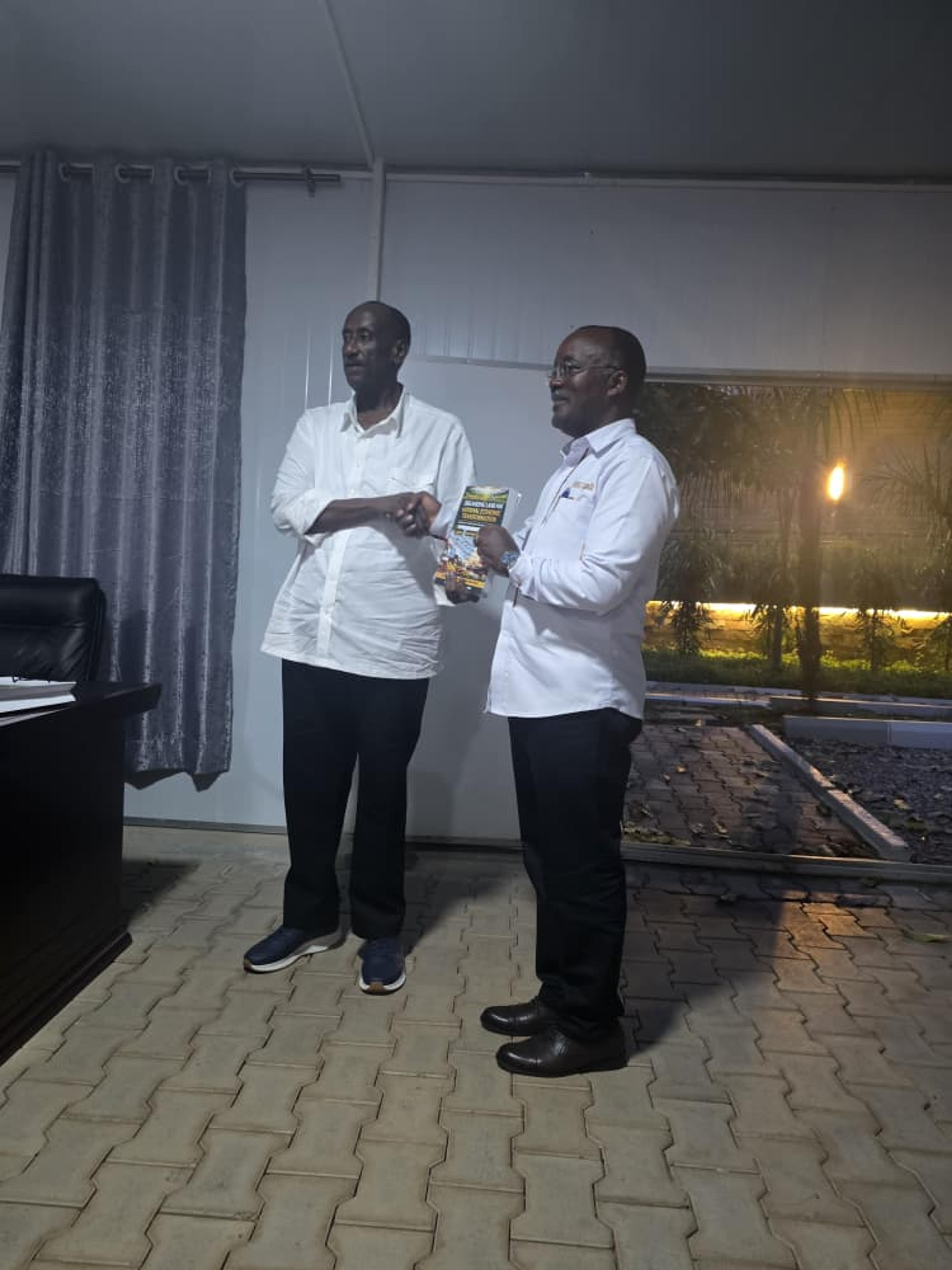
KAPEEKA, Uganda — Gen. Salim Saleh and National Water and Sewerage Corporation (NWSC) Managing Director Dr. Eng. Silver Mugisha have called for improved land ownership management and stronger institutional coordination as critical solutions to Kampala's growing solid waste crisis.
Speaking during a meeting in Kapeeka, Nakaseke District, on Tuesday, the leaders said the capital's waste challenges stem less from inadequate garbage collection equipment and more from poor land organization that limits waste treatment and disposal infrastructure.
The meeting, convened by Gen. Saleh, the Senior Presidential Adviser and Coordinator of Operation Wealth Creation, reviewed progress on the Organic Dark Matter initiative, a joint sanitation programme involving Kampala Capital City Authority (KCCA), Operation Wealth Creation, and NWSC.
The initiative was launched earlier this year to tackle Kampala's sanitation emergency. The city generates an estimated 2,500 to 3,000 metric tonnes of waste daily, but collects less than half of it due to limited collection infrastructure, illegal dumping, and inadequate disposal capacity.
Officials noted that nearly 80% of Kampala's waste is organic, making it particularly difficult to transport, process, and dispose of without adequate land.
Participants agreed that Uganda's complex land tenure systems and weak coordination among land-owning institutions have become major obstacles to establishing sustainable waste treatment and disposal facilities.
They concluded that resolving land ownership challenges is essential to any long-term solution for Kampala's waste management.
NWSC currently operates Kampala's sewage and faecal sludge treatment infrastructure, including treatment plants at Bugolobi, Lubigi, and Nalukolongo, as well as the Kinawataka sewage pre-treatment system.
Although the upgraded Bugolobi plant processes up to 45,000 cubic metres of wastewater per day, generating biogas and producing dried sludge for agricultural use, sewer coverage remains limited. Most residents still rely on pit latrines and septic tanks that require regular emptying by cesspool trucks.
During the meeting, Gen. Saleh also presented Dr. Mugisha with a copy of his recently published book, Organizing Land for National Economic Transformation: Kapeekanomics, Industrialization and Uganda's Development Logic, co-authored with development scholar Dr. Pascal Odoch.
The book argues that Uganda's development challenges are rooted not in land scarcity but in ineffective land organization and coordination.
Gen. Saleh praised NWSC for expanding water infrastructure in the Kapeeka industrial area, particularly through improvements to the Kapeeka water supply system that draws water from River Mayanja to serve the China–Uganda Liao Shen Industrial Park and neighbouring communities.
Dr. Mugisha reaffirmed NWSC's commitment to strengthening collaboration among government agencies, development partners, and other stakeholders to improve public health, environmental protection, and sustainable waste management across Kampala.
The discussions come as Kampala continues to struggle with mounting waste volumes. Collection systems have repeatedly come under pressure, including during Uganda's first National Cleaning Day, when the volume of garbage overwhelmed collection teams and temporarily clogged the Buyala disposal facility.
The meeting was also attended by former State Minister for Water Ronald Kibuule, National Environment Management Authority Executive Director Dr. Akankwasa Barirega, Ambassador Phillip Idro, and Kampala Capital City Authority Director of Environment Dr. Zalwango.