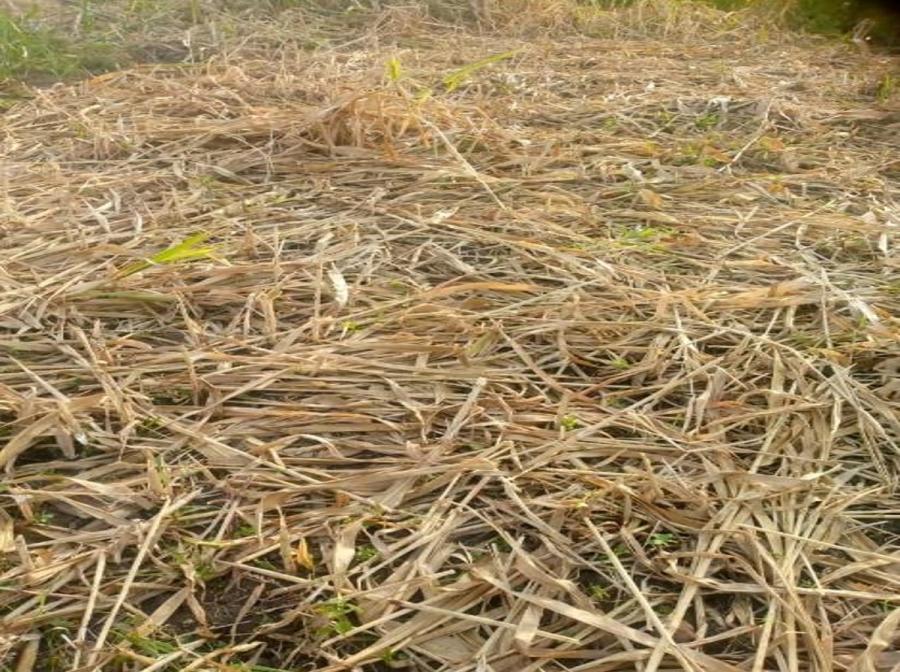
In Kotido, hunger is now killing faster than any drought before it
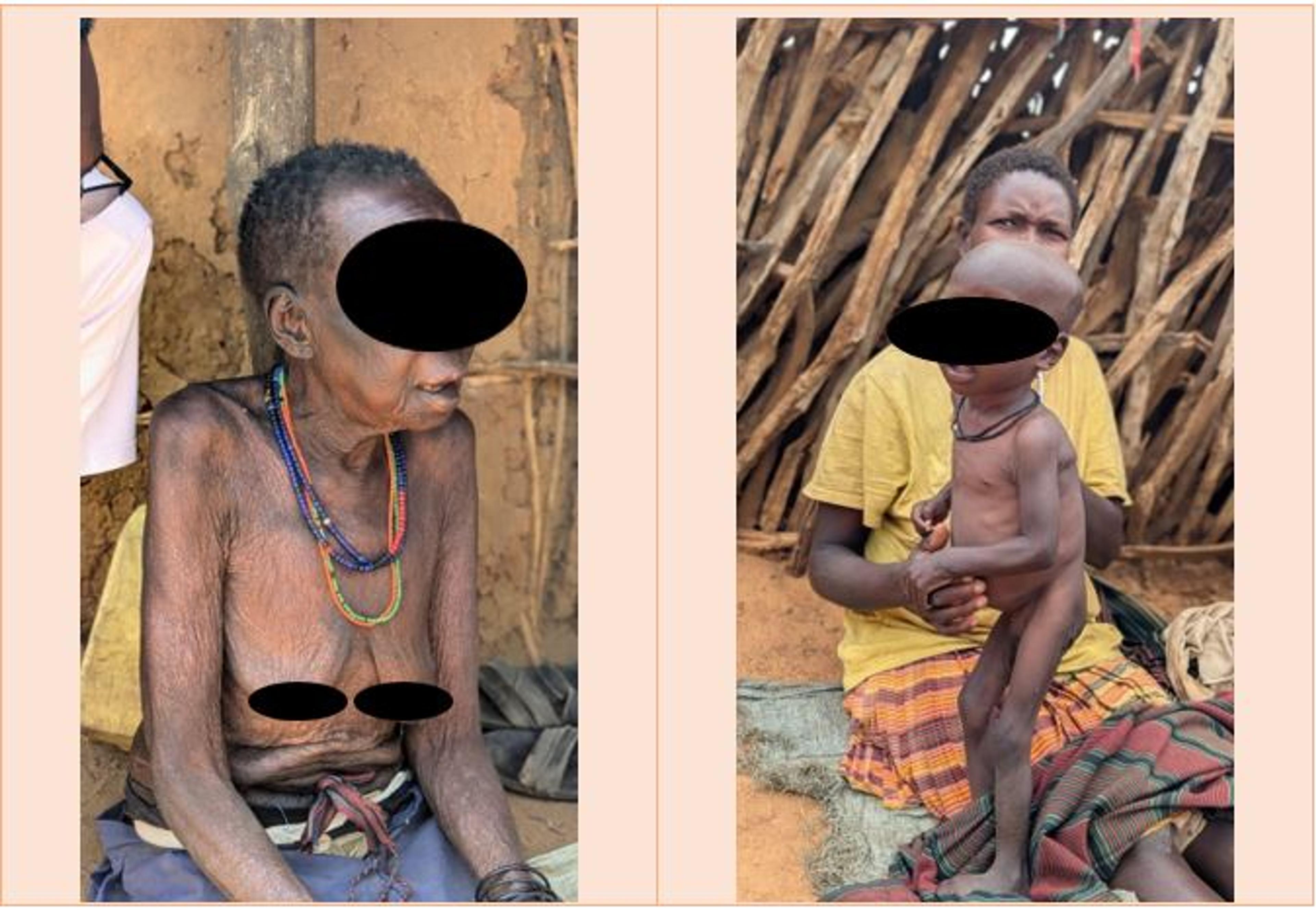
An elderly woman tends to a child in Kotido District, where officials say the elderly and children have borne the brunt of the hunger crisis. Identities have been obscured to protect those pictured.
More than 1,300 people have died of hunger in five months as crop failure grips Karamoja, and aid reaching the district is a fraction of what is needed.
In the homesteads scattered across Kotido District, the signs of hunger are no longer subtle. An elderly woman sits with a child too weak to hold themselves upright. A young woman lies on the bare ground outside her hut, unable to sit up. Fields that should be green with sorghum this time of year are instead brown and brittle, the stalks dead before harvest.
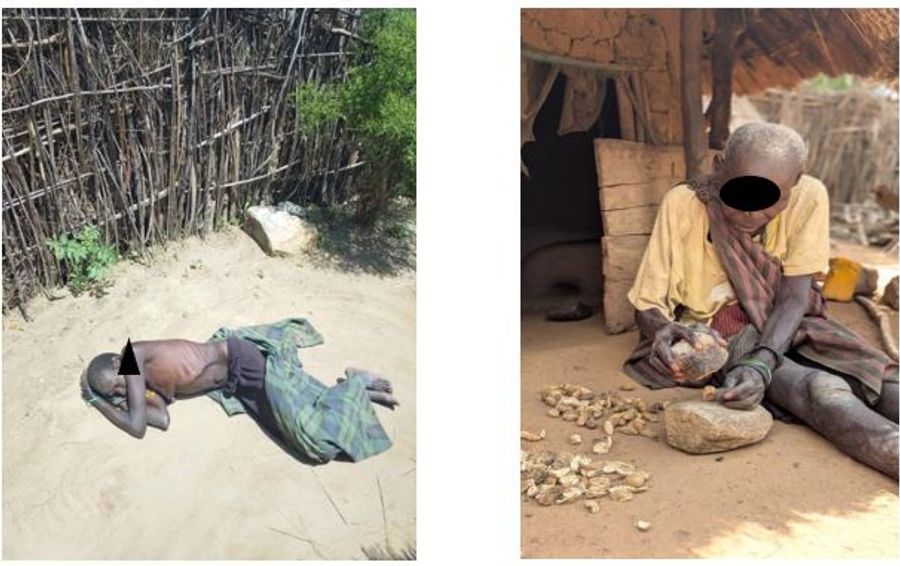
Between March and July 2026, 1,375 people in Kotido died of hunger related causes, according to figures from the district's local government. The toll is being driven by what officials describe as total agricultural collapse: a Rapid Impact Assessment by Kotido's Production Department found 100 percent crop failure across the district in that period, wiping out an estimated UGX 56 billion in produce. Regionally, the Famine Early Warning Systems Network (FEWS NET) puts crop losses across much of Karamoja at 50 to 70 percent.
"The current hunger is not due to laziness of farmers but due to the alarming climate change," said Obin Benard, Kotido's District Agricultural Officer. He pointed out that even sorghum, the grain Karamoja has long relied on for its resilience to harsh weather, failed this season.
A district with nowhere left to turn
Kotido is home to roughly 219,700 people. District authorities say more than 45,600 households, families who depend entirely on crop farming, have been left with no income at all. Many others who once earned a living offering seasonal labour to farmers have also lost that work. With literacy rates in the district low and formal jobs scarce, Benard said most households can no longer afford even a kilo of beans.
The scale of the failure is made more painful by the fact that it was not entirely unforeseen. Meteorologists had forecast a dry spell for the region, and the district did receive good rainfall in February and March. But no anticipatory action was taken to soften the blow before it landed. Forecasts now suggest only isolated rain through August and September, offering little relief in the near term.
Malnutrition has reached IPC Class 4, critical, according to Dr. Erechu, Kotido's Head of Production, a classification that officials warn could translate into more deaths without urgent intervention. Across Karamoja, the latest Integrated Food Security Phase Classification analysis estimates that 473,000 people, about 32 percent of the region's analysed population, are facing Crisis level food insecurity or worse, including 41,000 people already in Emergency, Phase 4. Roughly 122,100 children between 6 and 59 months old are projected to suffer acute malnutrition between March 2026 and February 2027, of whom 30,600 cases are expected to be severe.
Support has not kept pace with need. Of the more than 45,000 affected households in Kotido, only about 7,000 have received cash transfers from the World Food Programme, support that has mostly gone to the elderly. That leaves an estimated 38,000 households with no formal safety net at all.
Livestock survive while crops fail
One thing has held up. Livestock across the district have largely been spared, after more than 300,000 animals in Kotido were vaccinated ahead of the dry spell, Erechu said. But with crop production having collapsed almost entirely, healthy herds have not been enough on their own to keep families fed.
Erechu is now pushing for a combination of emergency and longer term responses, cash transfers, emergency food relief, and drought resistant, quick maturing seeds such as green grams and cowpeas, along with farming tools and support for farmer cooperatives that could give households more bargaining power. He has also floated community based cereal banking, used in other regions, to help families stockpile food ahead of future dry spells.
Benard, for his part, wants to see kitchen gardening promoted at the household level and anticipatory action planning built into how the district responds to early warnings, so that forecasts trigger action before a crisis unfolds rather than after. He also called for better roads and market infrastructure to help farmers sell beyond Karamoja, and start up capital for youth enterprises to diversify household income beyond farming alone.
A government response that has not matched the scale of the crisis
The national government has begun to act. On July 9, the Office of the Prime Minister confirmed hunger related deaths across Karamoja and sent 22 tonnes of emergency food, 13 tonnes of maize flour and 9 tonnes of beans, to the hardest hit sub-counties in Kaabong District, with more consignments planned for Kaabong, Kotido, Amudat, Napak, and Moroto. OPM Permanent Secretary Alex Kakooza said the office would seek Cabinet approval on July 13 to procure additional food supplies for the wider region.
Even so, the response falls well short of what is needed. FEWS NET projects that between 2.5 and 2.99 million people across Uganda will require food assistance from June 2026 through January 2027, with needs expected to peak between September and November as the first season's food stocks run out. Twenty two tonnes of food can sustain only a fraction of affected households for a short time, and limiting deliveries to a handful of sub-counties risks leaving other struggling communities out entirely. Meanwhile, the time needed for Cabinet approval slows relief that is already overdue. With deaths already confirmed and the hungriest months still ahead, food aid alone will not be enough without nutrition support, help rebuilding livelihoods, and better access to water.
A crisis Karamoja has lived through before
This is not new territory for the region. In 2022, back to back years of crop failure, desert locust invasions, and rising food prices pushed more than 518,000 people, close to 40 percent of Karamoja's population, into critical need, with hundreds of hunger related deaths recorded, most of them among children under five and the elderly. By 2024, after five straight years of below average rainfall, all nine districts of Karamoja were classified in Crisis phase or worse for the first time in three years.
A 2023 report by the Uganda Human Rights Commission found that dry spells contributed to an estimated 2,207 hunger related deaths across Karamoja in 2022, with Kotido recording the highest toll of any district at 1,676 deaths. The Commission traced much of the damage back to the state's failure to anticipate, reduce, and respond quickly enough to disaster risk.
With rain forecast to remain scarce through September, officials in Kotido say the next few months will show whether that lesson has been learned, or whether the district is once again living through a crisis it has already seen coming.