
Nabakooba to banks: Fund homes for the informal sector, not just the elite
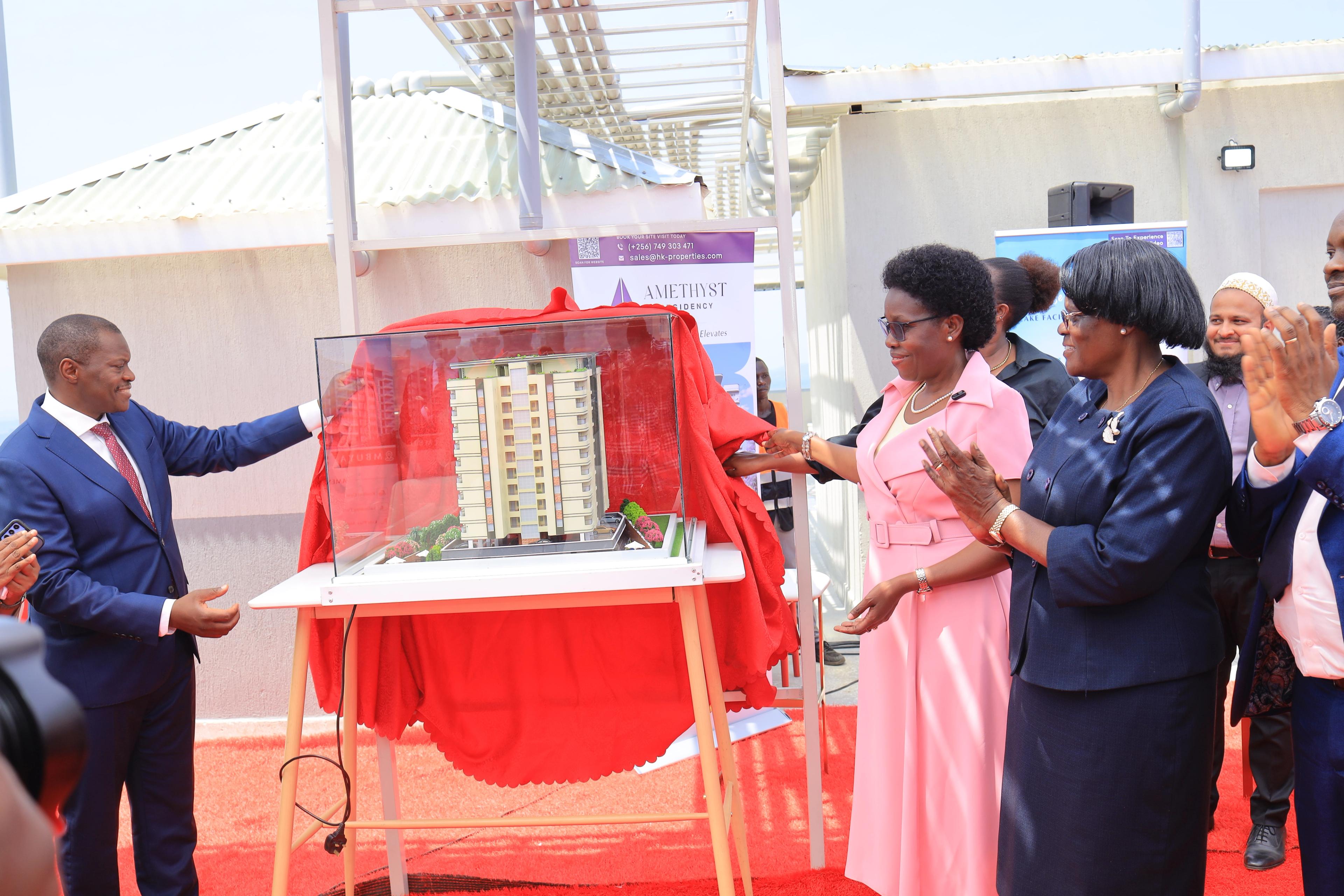
Godfrey Sebaana unveils a mockup of a residence available for the DTB Mortgage Financing during the product's launch at the Emerald Residences in Mutungo Hill in Kampala.
Diamond Trust Bank (DTB) Uganda has launched a new Mortgage Finance product aimed at expanding affordable home ownership, drawing institutional capital into real estate, and chipping away at a national housing deficit of more than 2.4 million units.
The launch took place at Emerald Residency in Mutungo, Nakawa-Kampala, under the theme "The Wealth Welfare Equation: Deploying Structured Mortgage Capital to Drive Institutional Real Estate Investment and Corporate Home Ownership." It drew DTB's board and management, developers including HK Properties, Universal Developers, Bakaima Properties, Frank Rodin Properties, Sinan Developers, Mint Homes, Comfort Homes, ADFS Properties and the National Housing and Construction Company, along with corporate leaders and government officials.
What DTB is offering
The new product works on two fronts. It gives large-scale developers reliable, long-term financing to keep projects from stalling and to boost housing supply. And it gives individuals and corporate employees direct access to mortgage financing, including custom schemes that let employers help staff buy homes.
Customers can access repayment periods of up to 20 years, with interest rates ranging from 15% to 20% depending on a borrower's risk profile. DTB has also arranged to finance the developers themselves, with completed units then feeding straight into the mortgage pipeline so capital keeps moving rather than sitting tied up in stalled projects.
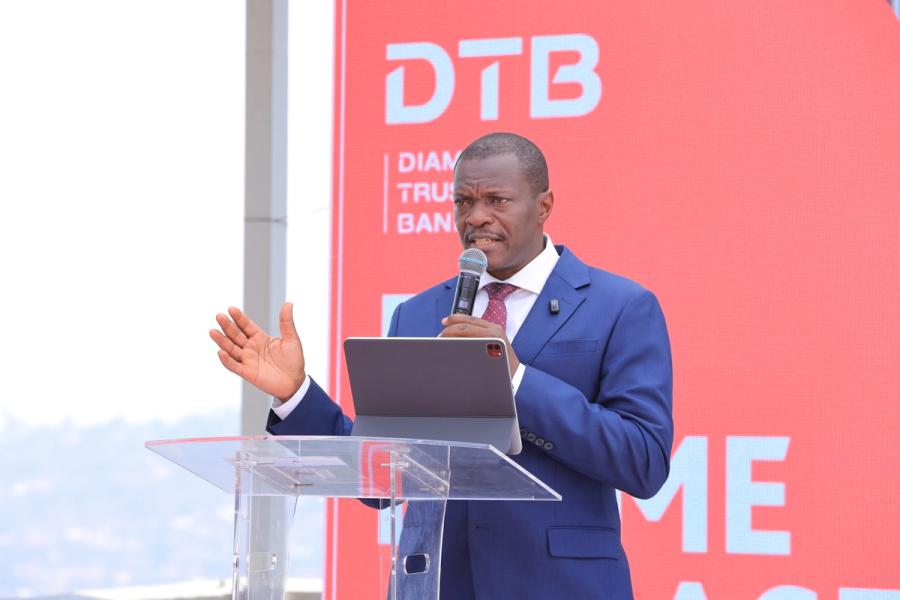
DTB Managing Director Godfrey Ssebaana described the approach as "patient capital," financing built around the reality that most salary earners can only realistically own a home over a long horizon.
"As DTB, we believe housing is a foundation for financial security and long-term wealth creation," Ssebaana said. "Through structured mortgage financing, we are committed to empowering developers to build with confidence while creating a pathway for individuals and corporate employees to own homes, thus making property ownership more accessible to more Ugandans."
A market that has barely scratched the surface
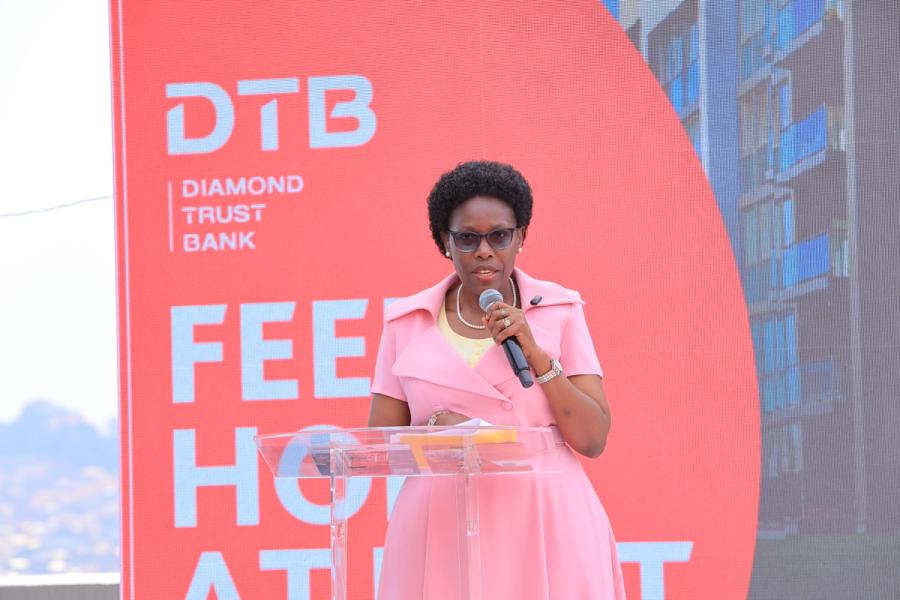
Chief guest Hon. Judith Nabakooba, Minister of Lands, Housing and Urban Development, officiated at the launch and framed it as more than a business move. "You are not merely launching a commercial service," she told DTB. "You are actively answering a national call."
She laid out just how far Uganda's mortgage market still has to go: penetration remains below 1% of GDP, with fewer than 40,000 active mortgages serving a population of 45 million. That leaves roughly 60% of Ugandans in inadequate or informal housing, against a deficit of 2.4 million units that is projected to keep climbing as urban centres grow at 5.2% a year, among the fastest rates in the world.
Nabakooba pointed to four structural reasons mortgage uptake has stayed so low: interest rates that typically run between 17% and 24% per annum across the banking sector; a land tenure system riddled with disputes and unclear ownership, which makes it hard for many Ugandans to offer secure collateral; widespread informal employment, leaving most prospective borrowers without the steady, verifiable income banks require; and a longstanding maturity mismatch, where banks have relied on short-term deposits to fund long-term mortgages, driving up both costs and risk.
The government's reform push
Nabakooba said these barriers are being addressed as part of Uganda's five-year National Development Plan and Vision 2040 agenda, through a public-private model in which government provides urban infrastructure (roads, water, power, sewage) so developers can concentrate on building.
Central to that effort is the Mortgage Refinance Institution Act, which she described as landmark legislation that will let mortgage refinance institutions issue corporate bonds to raise long-term capital, giving commercial lenders like DTB the patient capital needed to fix the maturity mismatch and, over time, pull mortgage rates down toward single digits. A companion Valuation Act aims to professionalise and standardise property valuations, curbing the artificially inflated prices that have driven up transaction costs and triggered defaults.
On land, the ministry is expanding its Land Information System and digitising registration nationwide to simplify searches and stamp out fraudulent multiple titling, and is building a corporate portal that would let banks query land parcel data directly to speed up mortgage processing. Nabakooba added that her ministry is in active dialogue with the Ministry of Finance over proposed stamp duty amendments, with the goal of keeping fiscal policy supportive of property transactions rather than adding friction to them.
Her challenge to DTB: Go beyond the top 5%
Closing her remarks, Nabakooba pushed DTB to widen its ambitions beyond Uganda's formally salaried elite. "Do not look only at the top 5% of the formal earners," she said, urging the bank to design products that recognise the cash flows of traders, women and youth in the informal sector who drive the economy but lack a traditional payslip.
She also called on DTB to expand beyond Kampala into Uganda's ten newly operationalised cities, including Lira, Gulu, Mbarara, Mbale, Jinja, Arua and Soroti, which she said are "starving for structured real estate financing." She invited private developers and investors to bring capital and green building technology into the sector, then formally declared DTB's Mortgage Finance product officially launched.
What's next
DTB says it is working with partner developers to bring a wider range of housing products to market across more price points, including options for lower and middle income earners, not just high-end developments. The bank is framing the launch as one part of a broader push, alongside government and developers, to keep the housing supply chain moving and narrow the country's deficit.
Ugandans interested in the product can contact DTB Uganda branches for guidance on eligibility and the application process.