
EACOP and Schneider Electric launch scholarships for 16 Ugandan Engineering Students
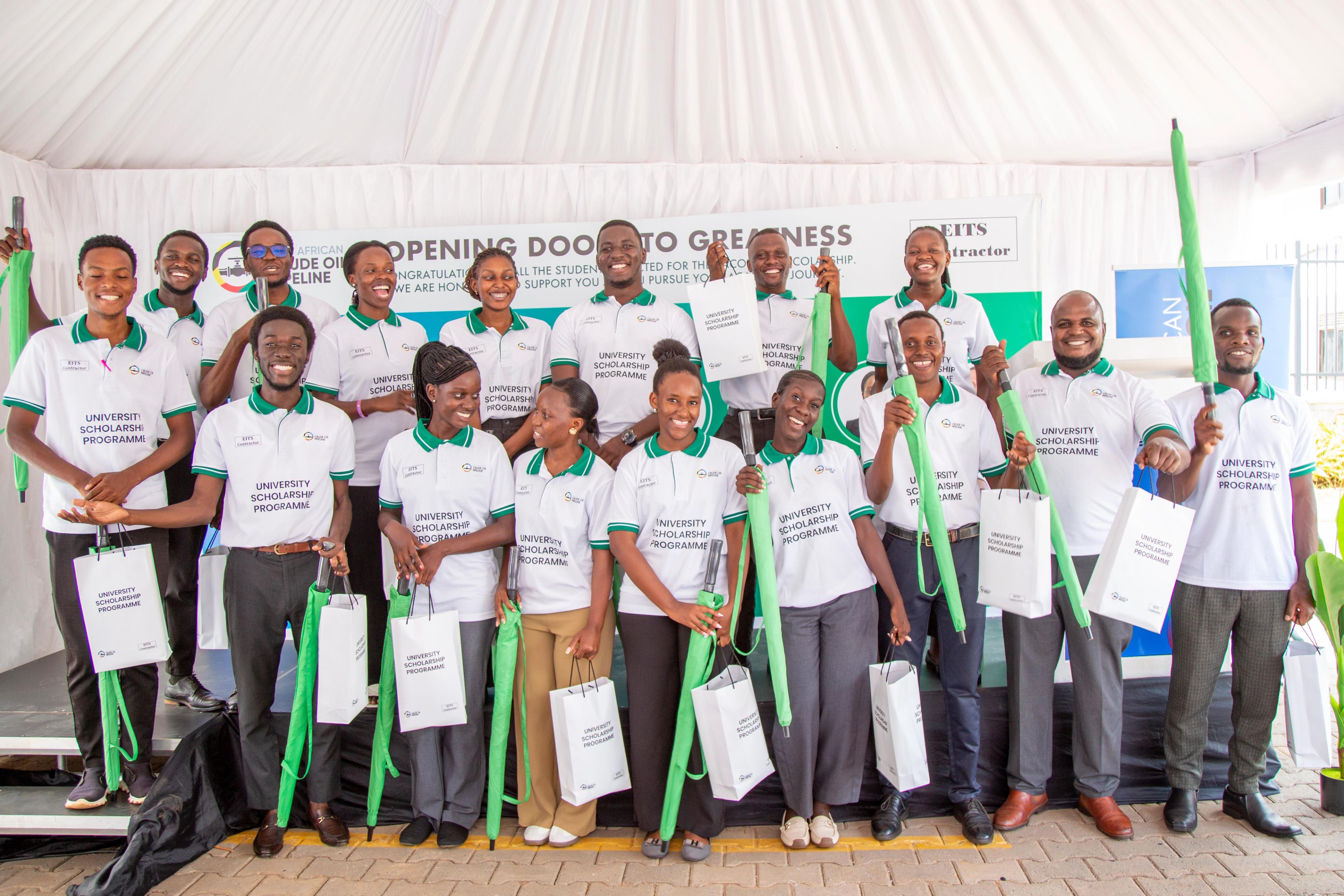
The 16 students selected for EACOP Scholarship pose for a photo during the scholarship launch in Kampala.
The East African Crude Oil Pipeline (EACOP) Ltd. has partnered with its Tier One Electrical, Instrumentation, Telecommunications and Security Systems (EITS) contractor, Schneider Electric, to launch a new university scholarship programme supporting 16 gifted but underprivileged students at Kyambogo University and Makerere University.
The initiative will fund students pursuing Telecommunications Engineering at Kyambogo (10 beneficiaries) and Computer Science at Makerere (6 beneficiaries) through to the completion of their degrees. It is the second scholarship programme EACOP has rolled out in Uganda, reinforcing the company's stated commitment to leaving a lasting development legacy beyond the construction of the pipeline itself.
Rigorous, transparent selection
Organisers said the selection process involved interviews with shortlisted candidates from each institution, weighed against academic performance, financial need, passion for the field, and a demonstrated commitment to driving positive change in their communities. Seven of the 16 selected students are female, a figure the programme's backers highlighted as a meaningful step toward greater representation of women in Science, Technology, Engineering and Mathematics (STEM).
A Pipeline that is also an electrical megaproject
Speaking at the launch, Josiah Habwe, General Manager of EITS contractor Schneider Electric, described EACOP as being as much an electrical and telecommunications undertaking as an oil pipeline. He pointed to the scale of infrastructure running the length of the pipeline: the electrical systems that keep the crude heated in transit, the fibre and telecom masts installed along its route, substations, and control rooms coordinating operations from central hubs. It is this backbone, he said, that will draw many of the scholarship recipients, particularly those in telecommunications, into the project's operational future.
Habwe noted that Schneider Electric maintains offices in both Uganda and Tanzania to support the cross border project, and framed the scholarship scheme as an extension of the company's broader commitment to expanding access to energy and education. He urged the students to approach their studies and future careers with a mindset geared toward impact, for themselves, their families, and their communities, and with excellence, given what he called the highly advanced nature of the technology involved in the project.
Engineering as a service to communities
A senior EACOP representative addressing the students, introduced in the event's programme as speaking on behalf of the project, used the occasion to press a broader point: that engineering is ultimately a service to people, not just a technical exercise. Students were reminded that as they progress in their studies, they must also take time to understand the communities their work is meant to serve.
The address touched on some of the more technical realities of the 1,443 kilometre pipeline, including why it needs to be heated. Uganda's crude oil, described as "sweet" for its low sulphur content and therefore less corrosive to pipeline infrastructure, is also waxy and highly viscous, meaning it would solidify at room temperature if left unheated. The pipeline is insulated to conserve that heat, a design the speaker likened to "a very long flask."
Students were also encouraged to see themselves as ambassadors for the project once they don EACOP branding, and to be prepared to explain and defend the pipeline's purpose to sceptics, framing continued development of Uganda's oil resources as essential to connecting the country's crude to international markets and, in turn, funding schools, hospitals, roads and rail. The speaker drew a comparison to Nehemiah's rebuilding of the walls of Jerusalem, arguing that meaningful national progress is often met with resistance and must be defended even as it is built.
Part of a wider capacity building push
The scholarship programme sits within a broader set of national content commitments EACOP and its contractors have undertaken in Uganda. According to the project's corporate affairs department, EACOP and its partners have brought on 127 interns and graduate trainees to date, and delivered 808 hours of training to lecturers, technicians and professors at partner tertiary institutions through a Train the Trainer initiative. The project has also signed Memoranda of Understanding with institutions including the Uganda Petroleum Institute, Kigumba, Nakawa Technical Vocational College, and the Institute of Surveyors of Uganda, with further partnerships reportedly being explored ahead of the pipeline's operations phase.
The project has additionally trained 141 specialised students on live operating systems abroad, in countries including France, Oman, Malaysia and Tanzania, to prepare a local workforce for eventually running the pipeline's systems.