
Katosi plant running at half capacity as NWSC races to fix Kampala's water network
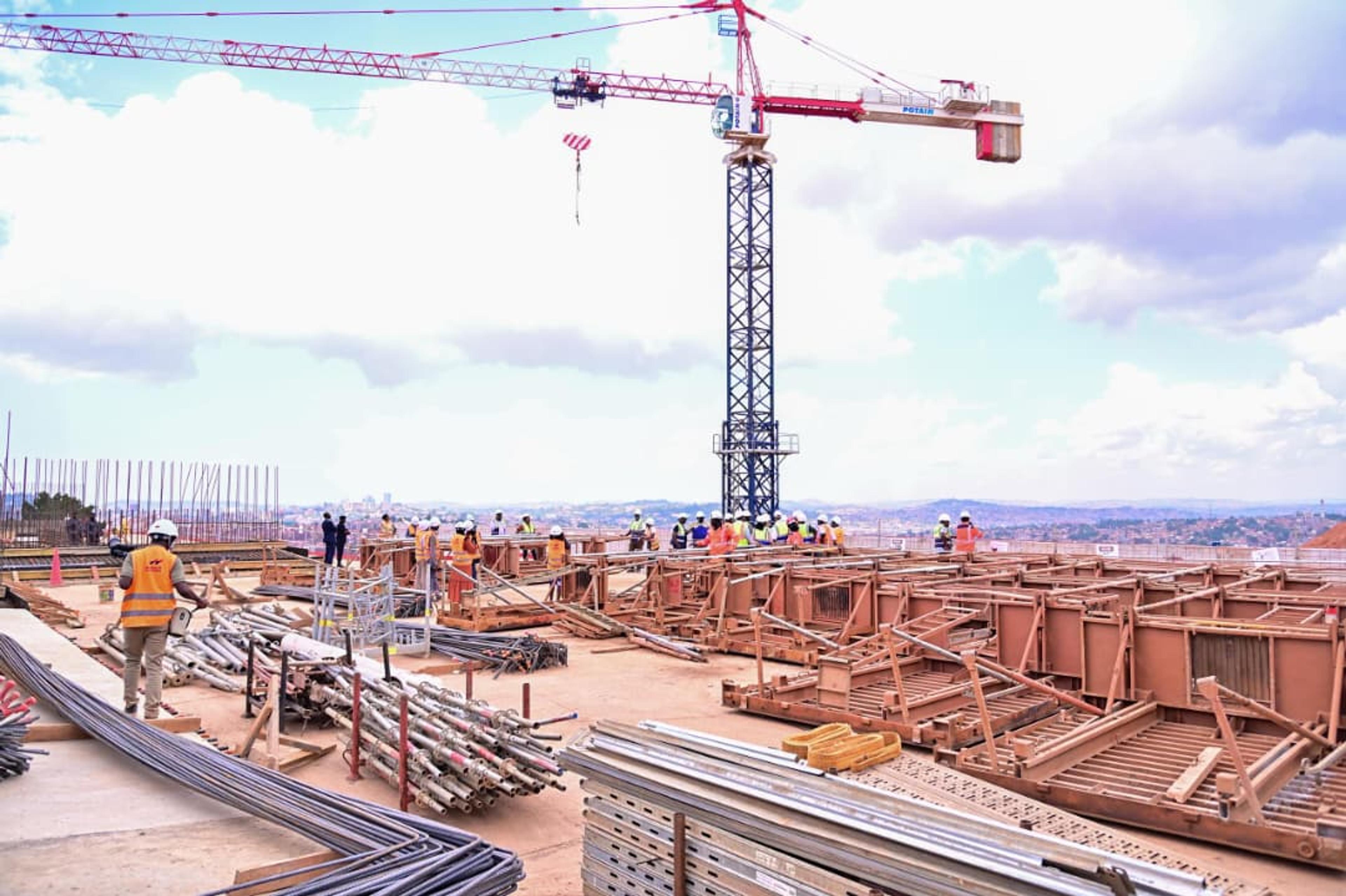
Uganda's National Water and Sewerage Corporation (NWSC) says its Package 2B network expansion project will end recurrent water shortages across the Greater Kampala Metropolitan Area. The project is designed to let the utility deliver the full output of the Katosi water treatment plant, which currently reaches customers at only about 52% of its 160-million-litre daily capacity because the distribution network cannot carry the rest.
NWSC managing director Eng Dr Silver Mugisha said this during a Wednesday tour of the Package 2B works, which include new transmission mains, reservoirs, and booster stations across north and west Kampala. He said the project would resolve immediate scarcity in fast-growing neighbourhoods while building enough capacity to meet demand projected through 2040, and that NWSC was deliberately shifting focus from adding production to expanding distribution so that treated water already in the system reaches households currently going without.
"The demand for water in the Greater Kampala Metropolitan Service Area is growing every day, and customers need answers," Mugisha told the contractor, pressing them to keep pipe-laying on schedule and on budget. "The project must be completed within time and budget."
He also directed NWSC engineers to begin work on an additional evacuation line from Katosi, which is designed to eventually produce up to 240 million litres a day, on top of the 160 million litres Package 2B will let the utility fully evacuate. Drawing more water from Katosi, he said, would relieve pressure currently carried by the older Ggaba works.
Phased rollout
While the full project is due for completion in 2027, the contractor is pursuing sectional handovers, commissioning finished sections as work progresses. The Namugongo–Kasangati line is expected by the end of this year, and a 7.7-kilometre bulk pipeline from Namugongo through Bulindo, Nsasa and Mulawa to the Kira–Kasangati road is due from December 2026, bringing earlier relief to Namugongo, Kira, Buwaate, Bulindo, Mulawa, Kasangati and surrounding areas.
Mugisha said he was pleased with progress in Nansana, Katooke, Kawempe and other sites, and pledged to inspect the project quarterly, directing the contractor and supervising consultant to submit an acceleration plan and quarterly progress reports.
Project consultant David Gaunt said the network was being built to last "over 50 years," and commended contractor Sogea Satom, which he described as internationally renowned for durable infrastructure work. Other NWSC officials, including senior director for projects Eng Paddy Twesigye, deputy managing director Eng Johnson Amayo and senior director for engineering Alex Gisagara, echoed the commitment to quality and reaffirmed that NWSC's internal teams are already prepared to manage the network once it is handed over.
Scope and financing
Formally titled the Rehabilitation, Restructuring, Rezoning and Extension of the GKMA Water Supply Network Project
Financed principally by the French Development Agency (AFD), with support from the European Union, the European Investment Bank and Germany's KfW
Built by Sogea Satom under supervision of the ARTELIA–Gauff Association, at a contract value of about €92.4 million
Scope: roughly 70 kilometres of transmission mains; three reservoirs (a 10-million-litre concrete tank at Kanyanya, a 3.89-million-litre steel tank at Kabulengwa, and a one-million-litre steel tank at Mutungo); booster stations at Kungu and Kabulengwa; and an upgrade to the Kampala Water SCADA control system
Began February 2025; now about 35% complete overall. The Kungu booster station leads at roughly 70%, followed by Kabulengwa at 65% and the Mutungo reservoir at 55%; pipe-laying is about a third complete, with 25 of 70 kilometres of mains laid
Once finished, NWSC says the upgraded network will extend supply to Kira, Kasangati, Gayaza, Matugga, Kawempe, Nansana and Wakiso town, among other areas in Wakiso, Kakiri, Gayaza, Nansana, Kanyanya, Luteete and Matugga.
The push comes as Greater Kampala's population surges. Wakiso and Kampala districts together hold more than 5.2 million people, according to the 2024 National Population and Housing Census, with Wakiso now the country's most populous district, growth that NWSC says has placed sustained strain on infrastructure that was unevenly distributed and, in places, ageing.