
Parliament approves five year fiscal charter aiming to cut commercial borrowing and trim debt by 2031
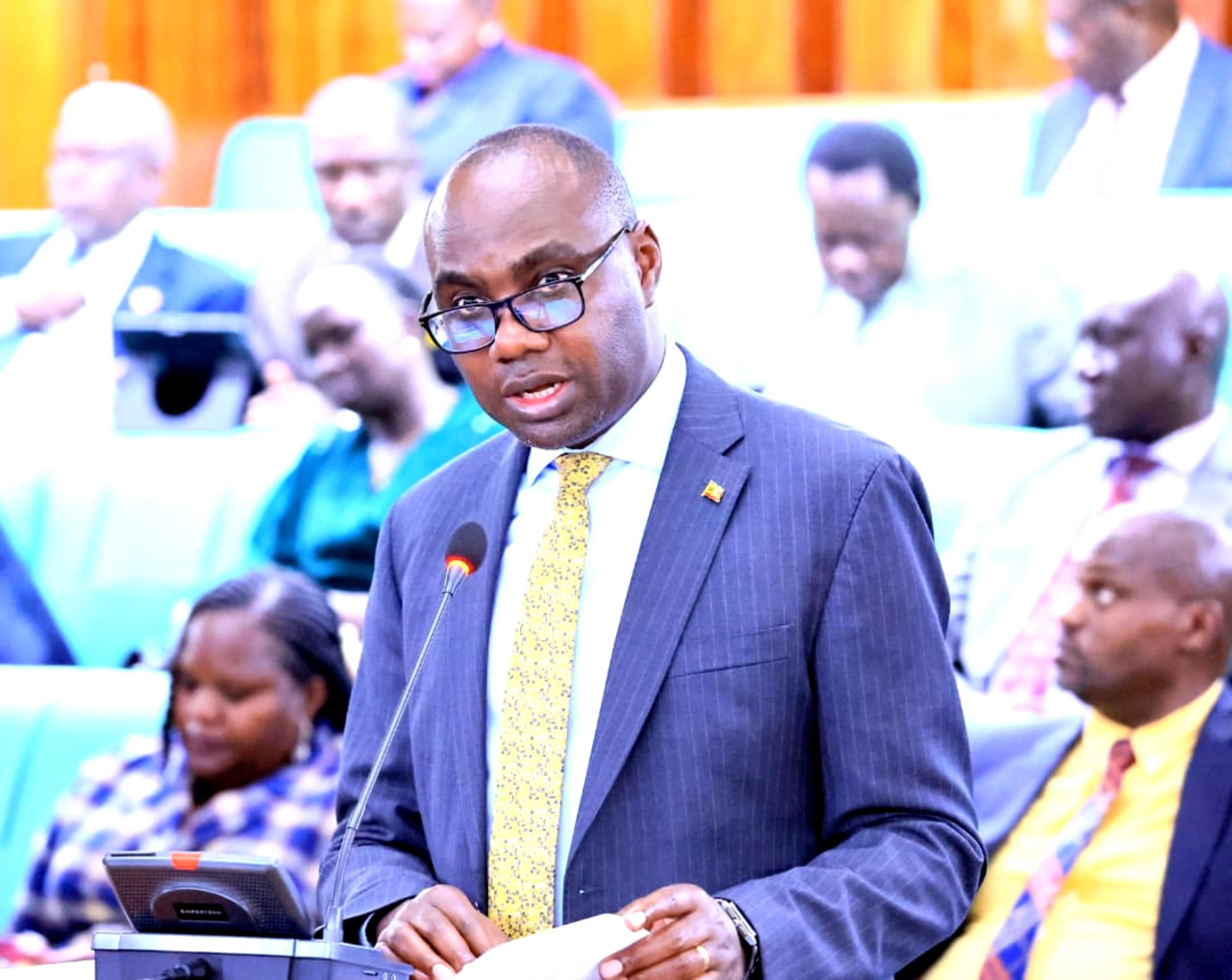
Courtesy Photo
Finance Minister says legally binding rules will protect stability, while MPs add safeguards on guaranteed debt and revenue
Parliament has approved the Charter for Fiscal Responsibility and the Economic and Fiscal Update for the 2026/27 to 2030/31 financial years, setting the fiscal policy framework for Government over the next five years.
The Charter was approved during Wednesday's plenary sitting chaired by Speaker Jacob Markson Oboth. Finance Minister Henry Musasizi moved the motion, and Budget Committee Chairperson Amos Kakunda, MP for Rwampara County, presented the committee report.
Debt to peak, then fall
Musasizi described the Charter as "Government's fiscal policy strategy over the next 5 years," aimed at keeping the economy stable while creating room for public investment and private sector led growth. He said it sets legally binding fiscal anchors to enforce discipline, speed up domestic revenue collection, reduce expensive non concessional borrowing and keep debt sustainable.
Under the Charter's projections:
Public debt is expected at 54.7 percent of non oil GDP in 2026/27, peaking at 55.1 percent in 2027/28 before falling to 50 percent by 2030/31.
Commercial borrowing as a share of domestic non oil revenue falls from 33.7 percent to 19.3 percent.
The fiscal deficit excluding petroleum revenues narrows from 6.6 percent to 1.5 percent of non oil GDP.
The Charter also caps the petroleum revenue transferred to the Consolidated Fund at 0.8 percent of the previous year's estimated non oil GDP. The balance goes to the Petroleum Revenue Investment Reserve.
Committee adds safeguards
Kakunda said the committee examined the Charter alongside the Economic and Fiscal Update and submissions from stakeholders. It proposed that nominal publicly guaranteed debt stay below 5 percent of non oil GDP throughout the period, and that domestic non oil revenue rise by at least 0.5 percentage points of non oil GDP each year, reaching at least 16.4 percent by 2030/31.
The committee also recommended strict adherence to the Commitment Control System, with sanctions for Accounting Officers who repeatedly commit Government spending without adequate resources.
"Fiscal consolidation must not be pursued at the expense of the social and productive foundations of growth," the committee said, adding that fiscal rules need effective enforcement and monitoring.
The framework will guide the Fourth National Development Plan and the Ten Fold Growth Strategy, which aims to grow Uganda's economy to US$500 billion by 2040.