
Sanitation scores just 38%: Masindi hospital staff trained to close WASH gaps
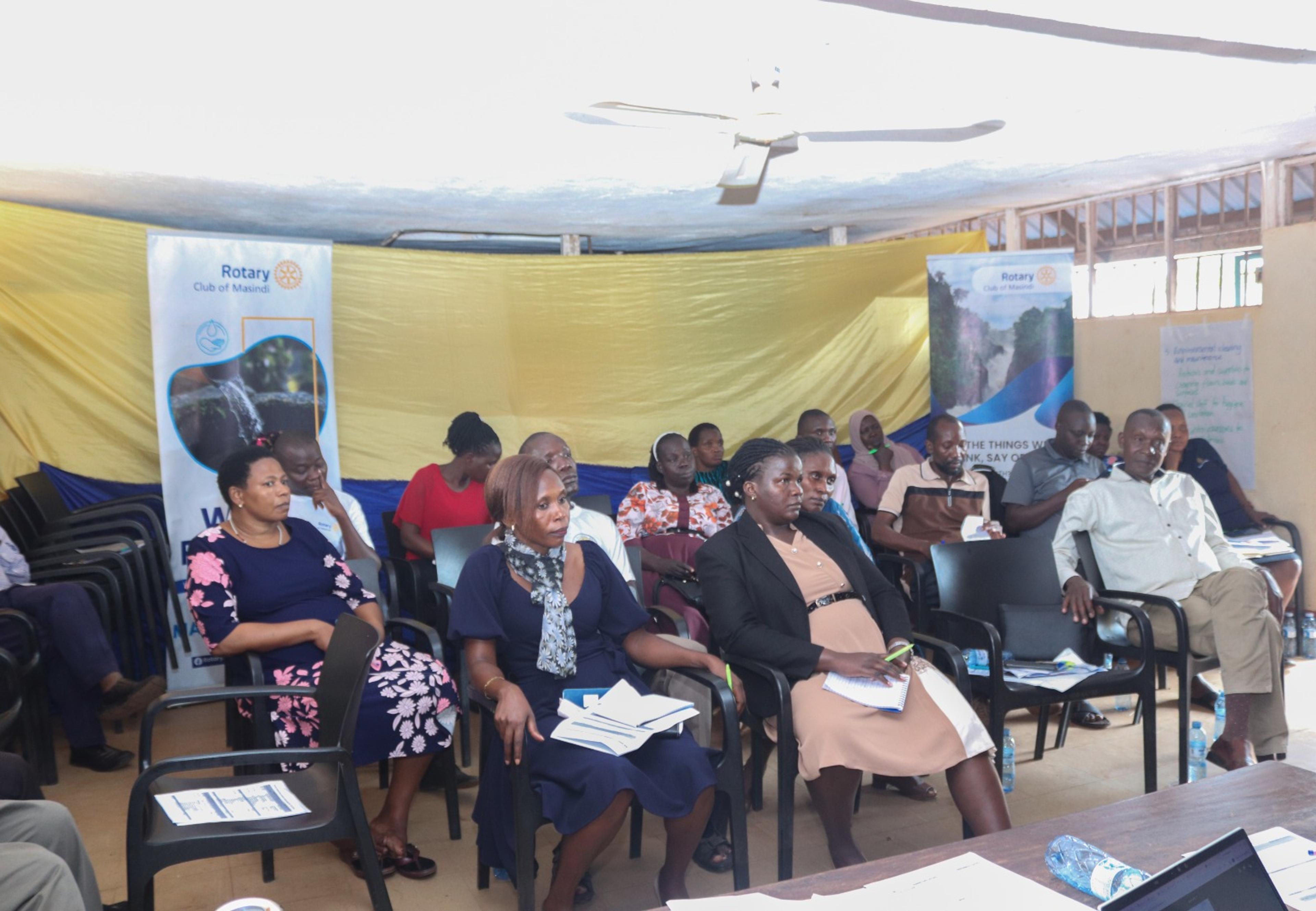
Staff at Masindi General Hospital have been urged to fully implement Uganda's National Guideline for WASH (Water, Sanitation and Hygiene) in Health Care Facilities, after an assessment found the hospital meeting only "basic" or "limited" standards across most WASH categories.
The call came during a one-day training held July 31 at the TASO boardroom on the hospital grounds, organized by the Rotary Club of Masindi. The session focused on WASHFIT, the WHO-developed WASH Facility Improvement Tool, and was attended by board chairperson Bagada Jonhwinter, key clinical and support staff, a laboratory technician, the hospital cleaners' supervisor, a finance officer, and a municipal council politician.
Assessment finds gaps across most categories
A facility-wide supervision conducted in groups during the training scored the hospital across WASHFIT's seven domains: water at 61%, waste management at 78%, management at 67%, energy at 65%, environmental cleaning at 44%, hygiene at 40%, and sanitation at 38%, the weakest score of the seven.
Facilitator Rita Opira Negesa said the tool is designed to help facilities identify such gaps and work toward "basic" service status, and explained each domain in detail, from reliable water access and functional, gender-separated toilets to waste segregation, routine cleaning protocols, and regular monitoring for problems such as broken taps or filled latrine pits.
Participants agreed on a set of corrective actions, including periodic water testing, construction of soak pits for drainage, installing handwashing points at all toilets and entrances, engaging the municipal council to supply and regularly collect domestic waste bins, labeling bins in local languages, developing a hospital cleaning policy, installing lighting in toilets and latrines, and demolishing non-functional facilities.
Training builds on earlier community sessions
Fellow facilitator Jacinta Nekesa Nangabo pointed participants to the 2022 National Guideline for WASH in Health Care Facilities, developed by the Ministry of Health, as the reference document underpinning the training, noting it is available online. She linked the hospital's WASH performance to Sustainable Development Goals 3 (health and wellbeing) and 6 (universal access to clean water, sanitation and hygiene), including the elimination of open defecation and better menstrual hygiene management in hospital toilets.
She noted that the hospital admits between 900 and 1,000 patients a month, with roughly 3,000 outpatient visits a quarter, drawing people from a wide range of backgrounds, underscoring the need for clear sanitation signage and sensitization across the facility.
Rotarian Mugisa Brenda, immediate past president of the Rotary Club of Masindi, said she remains the project's primary contact even after handing over leadership, and praised the strong staff turnout. She said the training built on an earlier session at the District Health Officer's chambers, where more than 60 participants, including Rotaracters and Village Health Team members, were trained to make liquid soap and reusable menstrual pads, skills she said could support both hygiene and income generation. Rotary plans to use these participants as peer trainers in schools and to follow up on how the skills are being applied.
Hospital cites cost savings, commits to follow-through
Dr. Musinguzi Rogers, the hospital's acting Executive Consultant, thanked Rotary and the facilitators, saying the hospital's water project has already cut quarterly water utility costs by more than 15 million shillings. He said the hospital's Infection Prevention and Control (IPC) committee and health inspector were among those trained, reflecting the facility's commitment to continuous quality improvement.
District Health Officer Dr. Kwikiriza Nicholas urged staff to act on what they had learned, noting that Ministry of Health policy is increasingly weighted toward preventive rather than curative care, including plans to recruit more community-level health workers. He said the timing was fortunate, coming just after a national cleaning day was launched at the hospital. He also raised concerns about reports of hospital staff extorting money from patients, particularly in the theatre, warning that this could draw scrutiny if Minister of State for Local Government Balaam Barugahara visits for supervision. Citing the hospital's rising profile with AFCON drawing more visitors to the region, he called for improved cleanliness in wards and public areas.
Rotarian Baguma Ronald, another past Rotary Club president, said the completed water project should not be treated as a stopping point, and urged the hospital to continue requesting Rotary's support. He noted Rotary International's broader focus areas, including environment, disease prevention, conflict resolution, WASH, and maternal and child health, and said rising patient numbers driven by improved services would need to be matched with adequate staffing and further needs assessments.
Closing the session, board chairperson Bagada Jonhwinter acknowledged the facilitators' contribution, saying the training reinforced practices already familiar to hospital staff but had highlighted overlooked gaps. He said funding to address issues such as unlit toilets and waste management shortfalls is expected in the hospital's second-quarter budget, and proposed that the 15th of every month be designated a general cleaning day involving hospital staff, caretakers, and Rotary volunteers. Rotary said it would return to monitor progress on the agreed action plan.