
Soap, pads, no more taboos: Masindi trains 60
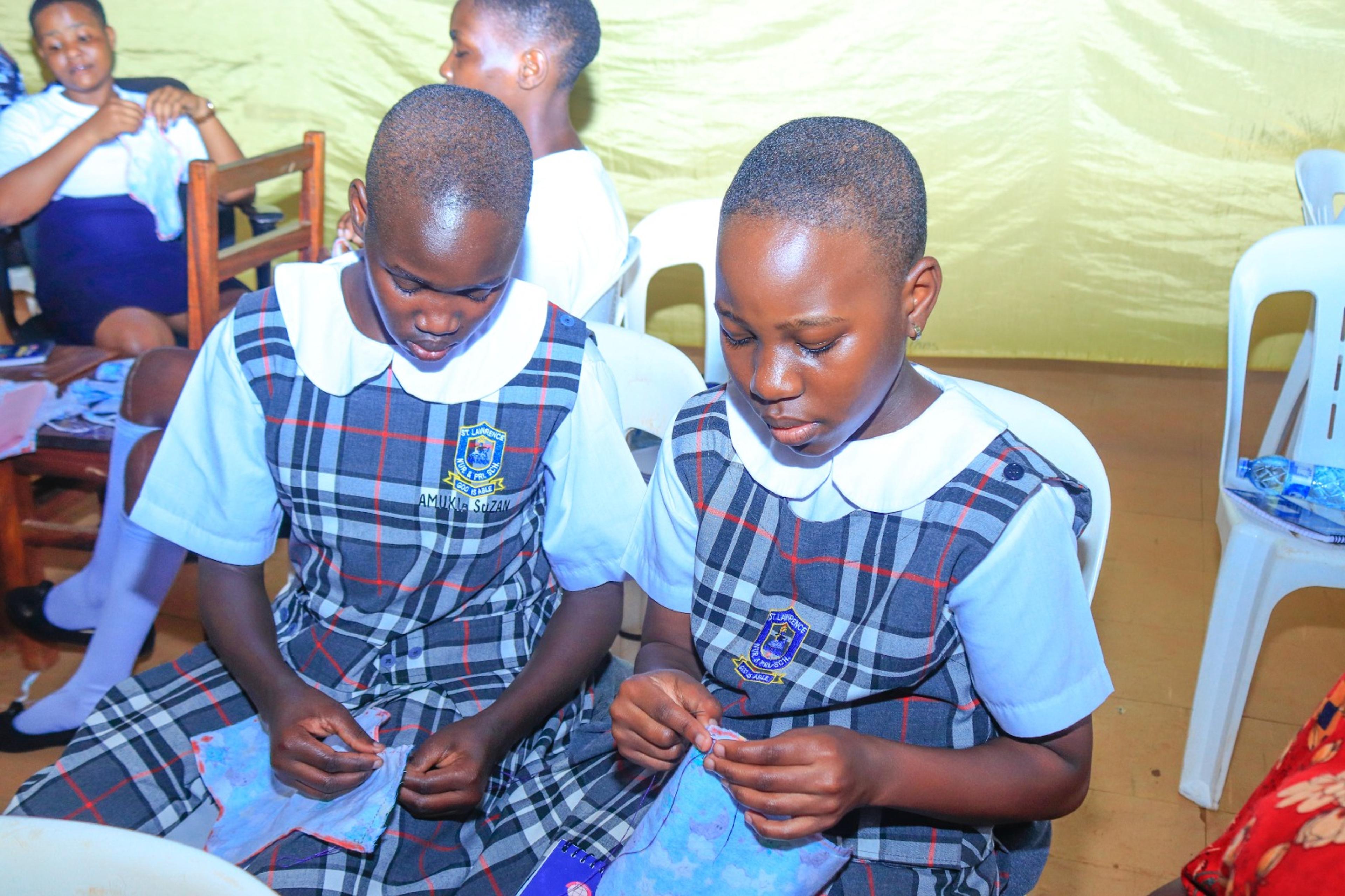
More than 60 school learners, teachers and Village Health Team members were trained to make liquid soap and reusable menstrual pads on July 30 at the District Health Chambers, in a Rotary Club of Masindi workshop aimed at building both hygiene practices and household income.
Participants came from Masindi Public School, Masindi Town Model, Uthman Mixed Primary School, St. Lawrence Primary School, Bright High School and Interactors of Masindi Secondary School.
Skills meant to travel beyond the workshop
Katwesige Janet Wamara, president of the Rotary Club of Masindi, thanked participants for turning out to learn skills she said could benefit their communities. Speaking also in her capacity as a teacher with Red Earth Foundation, she said the organization trains teachers on skills suited to the current economic climate and on child-centered learning, aiming to raise learners who can create jobs rather than only search for them, a goal she said aligns with Rotary's own.
She noted that many people in the community can neither make reusable sanitary pads nor afford disposable ones, given their cost, and urged participants to take up the skills and pass them on as "ambassadors," saying teaching others deepens one's own learning. She pointed to the club's recent water project at Masindi General Hospital as an example of Rotary's community focus, saying the hospital now draws solar-pumped groundwater to all its wards and departments at no ongoing cost, freeing up funds for other hospital needs.
Soap-making: ingredients, quantities and safety
Facilitator Jacinta Nekesa Nangabo encouraged participants to use the liquid soap they had learned to make for regular handwashing, including before and after eating, after using a toilet or latrine, and while mopping.
Fellow facilitator Ritah Opira Negesa walked participants through the ingredients needed: water, salt as a thickener, a foam booster known locally as "ungallo," perfume and coloring, sulphonic acid to kill germs, caustic soda or soda ash to neutralize and lift stains, urea as a cooling agent and stabilizer, carboxymethyl cellulose (CMC) for thickening, and preservatives to extend shelf life. For a 20-liter batch, she gave quantities of 20 liters of water, half a kilogram of foam booster, one kilogram of salt, 10ml of perfume, a quarter kilogram of sulphonic acid, 30 grams each of soda ash and urea, and 20 grams of CMC, with coloring added to taste. She listed the equipment needed, including gloves, aprons and masks, mixing sticks, buckets, jerrycans, a weighing scale and a measuring beaker.
Negesa stressed safety precautions, noting that some ingredients, including sulphonic acid, can resemble food items such as honey and should never be tasted or left within reach of children. She advised participants to have all ingredients and clean equipment ready before starting, to measure accurately, to wear protective gear throughout, and to keep the work area clean. She then demonstrated the mixing procedure step by step, from dissolving CMC in water to gradually combining the foam booster, salt, sulphonic acid, urea, soda ash, coloring and perfume.
Breaking the silence on menstruation
Turning to menstrual health, Nekesa told participants that menstruation is a normal biological process, though it is still treated as taboo in many rural communities, leaving some parents reluctant to discuss it with their children. She said Village Health Teams were included in the training specifically so they could carry this knowledge back to their villages, and asked the boys and men present to support girls during menstruation.
She outlined common challenges, including heavy flow, cramps, backache, headache, dizziness and breast tenderness, and ways to manage them: recognizing early warning signs, reporting to a senior woman teacher, applying a warm towel to the lower abdomen, light exercise, pain medication, and seeking medical attention for persistent pain. She also described the school facilities needed to support menstrual hygiene, including an incinerator for used pads, a private changing room supervised by a senior woman teacher, a first-aid box stocked with emergency pads, underwear and uniforms, clean toilets, and handwashing points with soap and water.
Nekesa advised girls to change pads two to three times a day while at school to avoid odor and infection. She said the Ministry of Education has pushed for incinerators and drainable latrines in schools, since pads disposed of in ordinary pit latrines cause them to fill quickly, sometimes forcing schools into costly manual emptying when they cannot be cleared by truck.
Making reusable pads
Opira Negesa also guided participants through making reusable pads, using soft, absorbent cotton cloth and a liner, along with thread, needles, buttons, scissors, cutters and marking tools, cautioning learners on handling sharp tools safely, including not holding needles in the mouth. Each participant sewed a pad to take home, along with 500ml of the liquid soap they had made, to show their families what they had learned.
Calls for the training to expand
Rotarian Kenneth Orone praised participants' enthusiasm, saying their commitment would carry the skills forward if practiced consistently, and urged them to become ambassadors who introduce the training in their own schools, provided materials are made available for further teaching.
Katuku Abdul Aziz, Masindi Municipality's Southern Ward councillor and a Village Health Team member, thanked Rotary for investing in the workshop and called for similar trainings in other villages to prioritize girls during menstruation, urging municipal and district leaders to attract more donors like Rotary.
Mijumbi James, a Village Health Team member from Kinogozi B and coordinator for Kisiita Ward, also thanked Rotary and pledged to pass the skills on to his community. He said learners in his area sometimes leave school during menstruation for lack of pads, and that these skills could help keep them in school comfortably.